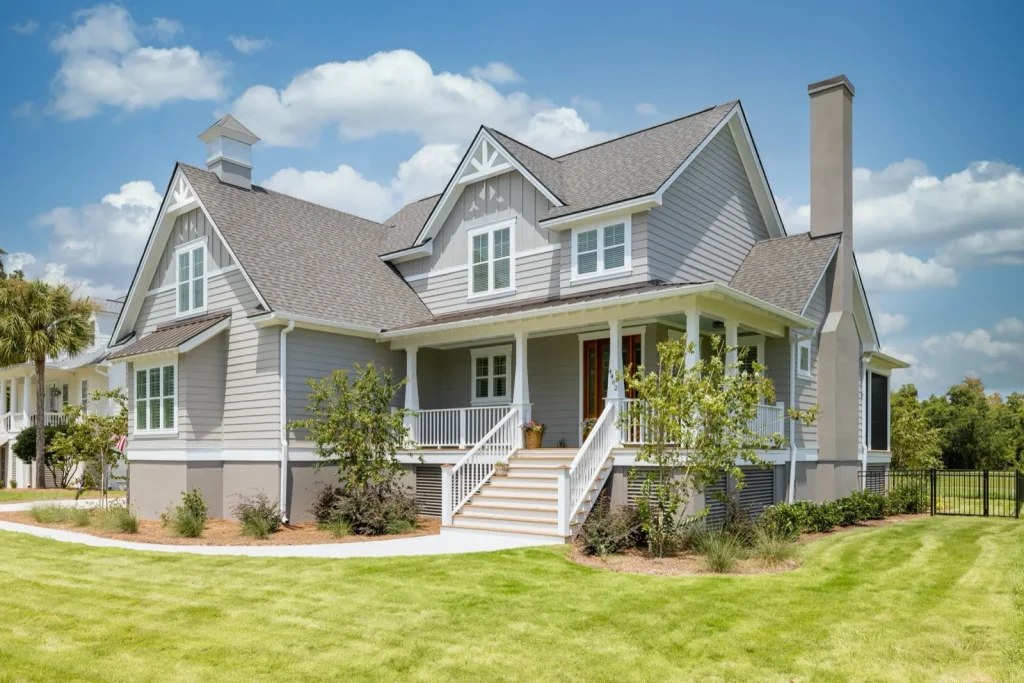
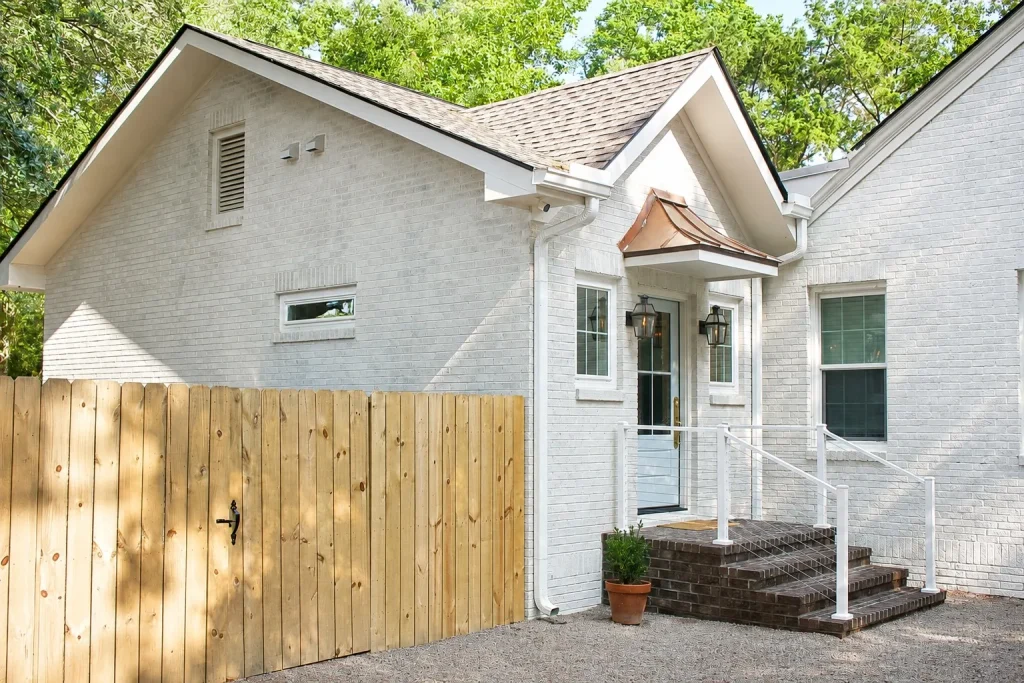
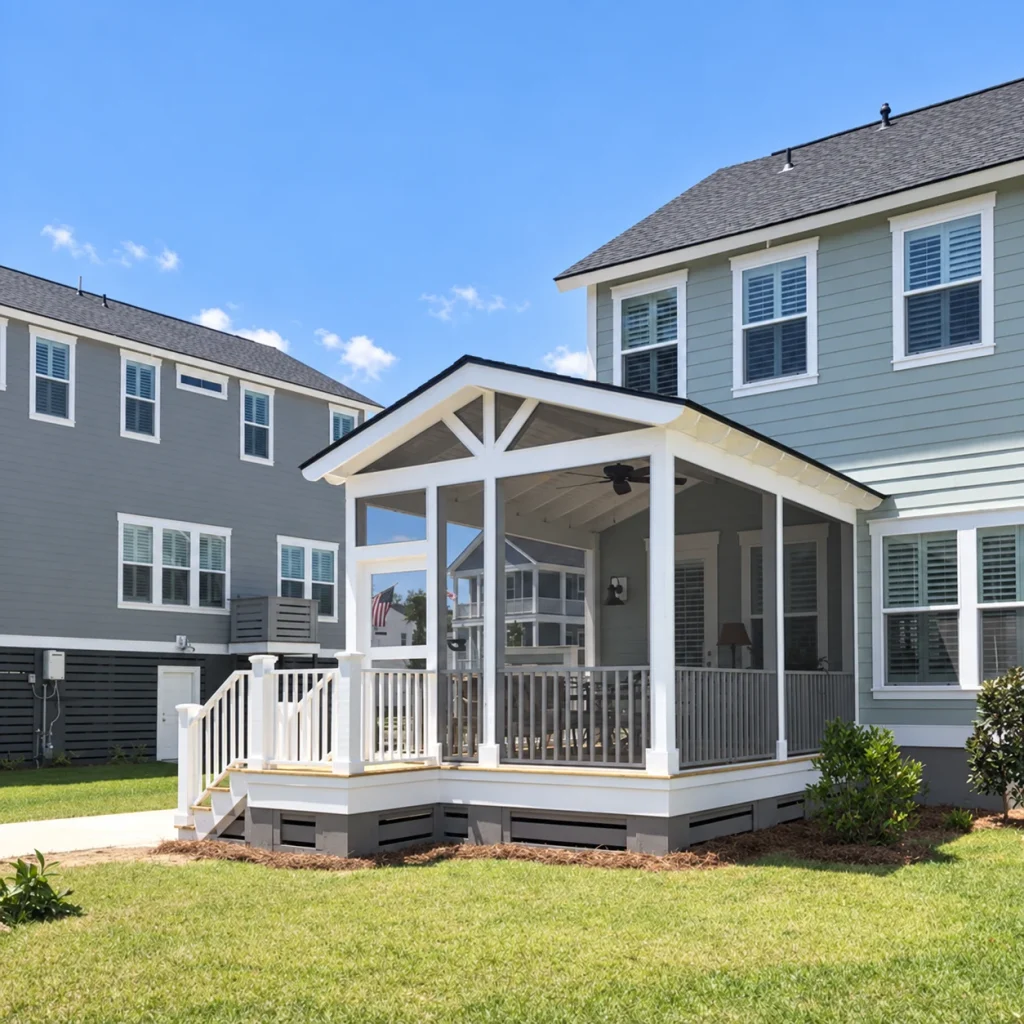
Seabrook sits one gate past Kiawah and one notch quieter — a private, owner-governed island where the pace is slower, the live oaks are older, and the building standards are every bit as real. Construction here means working inside a private community’s review expectations, moving every trade and truckload down Betsy Kerrison and through the gate, and building for a maritime environment that works on a house every day of the year. It also usually means an owner who lives somewhere else for much of the project, which quietly makes communication systems as important as craftsmanship.
These are the builders we would point a Seabrook owner toward — in no particular order, with the author’s firm leading because the author is only human. Each entry’s service area comes from the firm’s own published information.
1. Peartree Homes — Charleston & the Sea Islands
Seabrook owners often manage their project from somewhere else, and that is where Peartree’s way of working shows its value: a 24/7 client portal with selections, schedule, invoices and daily progress photos, a team that answers within a business day, and a fixed price agreed before construction begins — so the project you monitor from afar is the project you signed. Custom builds, whole-home remodels, kitchens, baths and additions across the sea islands and greater Charleston, with island review timelines planned into the schedule rather than apologized for later. A licensed and insured SC general contractor building here since 2012, with five PRISM Awards and back-to-back Best of the Holy City wins. additions, remodeling
2. Buffington Homes South Carolina — Johns Island / Kiawah
Seabrook is squarely inside Buffington’s home territory — the firm names it alongside Kiawah, Johns Island, Wadmalaw and Edisto — and thirty-plus years of island building, both new homes and renovations, make it an obvious call for work behind the gate. The office sits minutes away on Betsy Kerrison Parkway.
3. Kingswood Custom Homes — Charlotte & Kiawah/Seabrook
Kingswood’s island operation explicitly covers Seabrook as well as Kiawah: upper-bracket new custom homes from a builder that splits its practice between the Charlotte area and the South Carolina coast, with a string of design awards to its name.
4. Sea Island Builders — Sullivan’s Island
Despite the Sullivan’s Island address, this coastal firm’s service map runs the length of the Charleston coast — including Seabrook, Kiawah and Edisto — covering new construction, remodels and additions, with EPA renovator certification and LEED-trained green building practice suited to maritime sites.
5. Max Crosby Construction — Charleston
Nearly five decades of Charleston-area building — since 1977 — with long-standing ties to the sea island communities and a portfolio of custom and waterfront work that has appeared in the regional press for a generation.
What building on Seabrook actually involves
Seabrook’s character is the point, and the island protects it. New construction and major renovations pass through community review, which cares about how a house sits among the oaks and dunes as much as what it looks like up close — tree preservation, siting, massing and materials are all part of the conversation, and builders who work the island regularly design for that conversation from the start. The maritime forest setting adds its own engineering: many lots negotiate with mature trees worth keeping, flood elevations shape foundations, and the salt-and-humidity environment drives the same marine-grade specification discipline Kiawah demands — coated fasteners, corrosion-resistant hardware, cladding and coatings chosen for exposure rather than for the showroom. And because Seabrook is a gated community at the end of the road, logistics reward builders with established island trade relationships and supervision rhythms that do not depend on passing by. None of this is exotic to the firms above; all of it is expensive to learn on your project.
What to ask before building on Seabrook
Four Seabrook-specific questions sort the field quickly. How do you schedule around the community’s review and approval process — and how many projects have you taken through it? How do your crews and deliveries handle the gate and the drive, and who supervises on the days nobody is watching? What is your plan for moisture, wind and salt — materials, fasteners, flashing — on a house that lives in maritime air? And how will I follow the project from off-island: what do I see daily, and who answers when I call? Builders who work the islands weekly answer all four without blinking. Builders who hesitate are telling you where your project would break down.
Seabrook and Kiawah: same bridge, different briefs
Owners weighing the two islands deserve the builder’s-eye distinction. Kiawah builds tend toward the resort’s scale and visibility — larger programs, oceanfront drama, a review process calibrated to a world-class resort’s aesthetics. Seabrook’s brief is quieter: an owner-governed island where the maritime forest is the signature of the place, equestrian and club life shape the rhythm, and homes defer to the oaks rather than compete with the ocean. Practically, that means Seabrook projects often negotiate more with trees and topography, lean harder into preservation-minded siting, and answer to a community review culture that prizes restraint. The construction physics — wind, salt, flood elevation, one-bridge logistics — are shared; the design conversation is not. Builders who work both islands will describe the difference without prompting, and the way they describe it tells you whether they are fluent or just licensed.
The island renovation wave
Seabrook’s housing stock is quietly reaching a second construction era. Homes from the island’s early decades — beloved, well-sited, structurally honest — are arriving at the age where kitchens, baths, systems and envelopes all ask for renewal at once, and owners face the classic island decision: renovate deeply, or take down and build new. The right answer is lot-specific and structure-specific, and the builders worth hiring will price both paths honestly rather than steering you toward their preference. What tilts the decision: the quality of the original structure, how the current footprint sits against today’s flood and setback rules, what the review process would ask of a new build on that site, and how much of the home’s character is genuinely irreplaceable. It is one of the most consequential conversations on this island — have it with a firm that renovates and builds, so the advice is not secretly a sales channel.
Renovate or rebuild: Seabrook’s recurring question
Because so much of Seabrook’s housing stock dates from the island’s early decades, the renovate-or-rebuild decision comes up here constantly, and it deserves structure rather than instinct. The case for deep renovation: an original home whose structure is honest, whose siting under the oaks could not be permitted fresh today, and whose character is the thing you bought. The case for rebuilding: systems, envelope and layout all at end-of-life simultaneously, a footprint that fights modern flood elevations, or a renovation scope so total that the arithmetic favors starting clean. The analysis is lot-specific — structure, elevation rules, review expectations, tree constraints — and the honest answer sometimes changes mid-study, which is why you want it from a firm that builds both ways and will price both paths. Beware the advisor whose answer always matches their business model; the island’s best builders will occasionally talk you out of the bigger project, and that conversation is worth more than any brochure.
The practical rhythms of building behind the gate
Seabrook construction has a daily texture worth knowing in advance. Crews and deliveries move through a gate on a private island’s schedule, which rewards builders whose trades are booked in disciplined blocks rather than improvised visits. Materials staging is planned, because the lot under the oaks rarely has room for a second delivery’s mistake. Noise, hours and site conduct follow community standards — this is a residential island, not a development tract — and the builders who thrive here treat the standards as professional courtesy rather than friction. Weather windows get respected: coastal storms are schedule events, and dry-in dates are planned with the season in mind. And through it all, the owner is usually somewhere else, which is why the daily photo, the live schedule and the project manager who answers are not luxuries on Seabrook — they are the project. Ask every candidate to describe an ordinary Tuesday on their last island build; the texture of the answer is the reference.
What Seabrook owners say they wish they had known
A few lessons repeat in conversations with island owners, and they are cheap to learn secondhand. Start earlier than feels necessary: between review cycles, island logistics and the best builders’ calendars, the comfortable path begins a season before the ambitious one. Let the lot lead: the owners happiest with their homes chose designs that deferred to their trees and light rather than importing a plan from elsewhere. Spend on the envelope: the invisible money — fasteners, flashing, glazing, ventilation — is what the maritime climate audits annually, and the owners who spent there once are the ones not spending again. Build the communication habit before construction: the weekly call and the daily photos feel optional in month one and priceless in month seven. And keep a small decisions-reserve of patience and budget both, because even perfectly run island projects surface choices mid-stream — the owners who expected them enjoyed the process, and the ones who expected perfection renegotiated with reality on the fly. Every builder on this list has heard these lessons; the best ones will repeat them to you unprompted, in their own words, during the first meeting.
The encouraging summary beneath all the homework: Seabrook is a wonderful place to build, precisely because the standards that make it demanding also protect what you are investing in. Every oak preserved, every review cycle honored and every marine-grade fastener specified is compounding into the island’s long-term character — and your home’s long-term value. Choose a builder who talks about the island in those terms, and the process tends to take care of itself.
Start with the conversations: an hour each with two or three of the firms above, about your actual lot and your actual hopes, will teach you more than every brochure on the island. The builders who belong on your short list will make themselves obvious — Seabrook has a way of sorting for sincerity.
And bring your patience to the gate with you — the island’s pace is part of what you bought. The builders who match it, rather than fight it, are the ones whose projects end with owners who still wave at them from the porch.
Frequently asked questions
It is not a formal requirement, but it is a practical one: the review process, gate logistics and maritime specification are learned skills, and your project is a costly classroom. Every firm above has real island mileage.
Several do, ourselves included. Much of Seabrook’s housing stock dates from the island’s earlier decades and is reaching whole-home-renovation age; the same review and environmental rules apply to remodels as to new builds.
Substantially — the maturity of the maritime forest is part of the island’s value, and siting that preserves significant trees is part of design and review. Good builders treat the trees as design assets and plan protection into construction, not as obstacles to clear.
As involved as you like, if the builder’s systems support it: daily photos, a live schedule, written selections and a responsive project manager mean distance stops mattering. Ask to see the actual portal or reporting a firm uses before you sign. Customary honesty corner: written by the first firm on the list, ordered by nothing in particular after that, sponsored by no one. Verify everything we just told you — it is all checkable — and hire at your own discretion.